Best Email Warmup Tools: Features, Safety and What to Look For
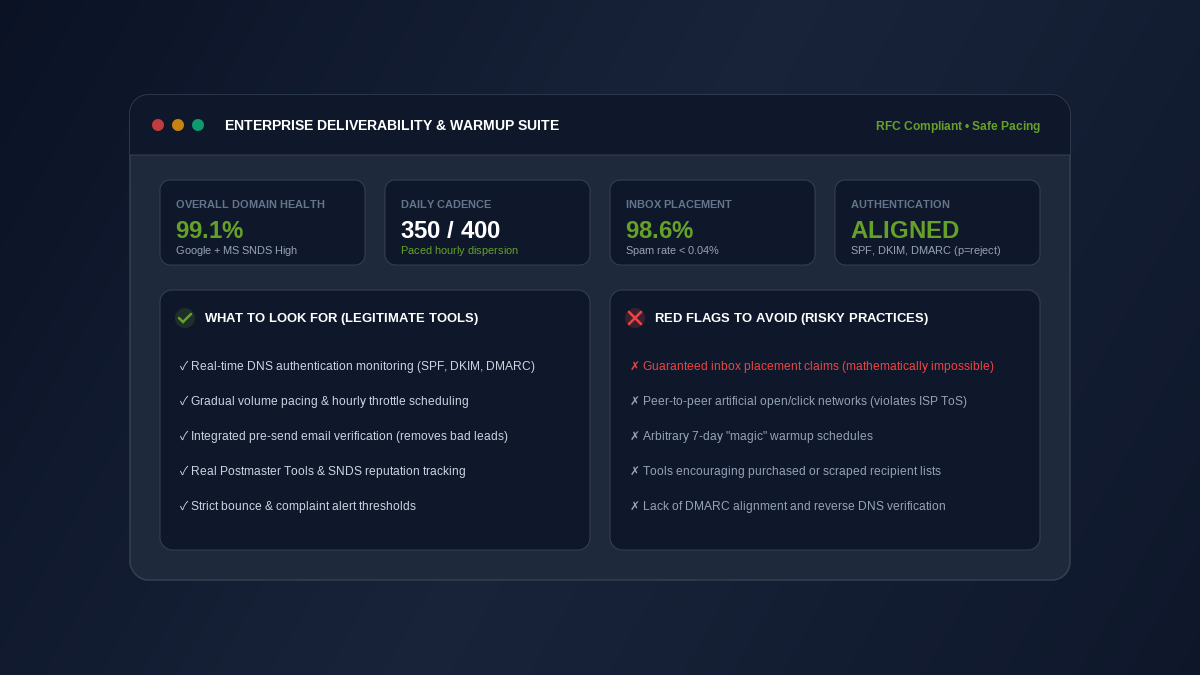
Direct Answer: A legitimate email warmup tool is a deliverability monitoring and cadence-management platform designed to help domain owners systematically ramp up outbound sending volume, verify continuous SPF/DKIM/DMARC alignment, monitor bounce rates, and integrate with official reputation tools like Google Postmaster Tools. Safe tools focus on disciplined sending cadence and list hygiene—not artificial bot engagement networks.
What a Legitimate Email Warmup Tool Does
Modern deliverability software serves as an operational co-pilot for your outbound infrastructure. Instead of attempting to manipulate algorithms with fake interactions, professional warmup platforms provide:
- DNS Verification & Monitoring: Continuous checks to ensure SPF, DKIM, and DMARC records remain valid and uncorrupted.
- Hourly Volume Pacing: Scheduling outbound dispatches to avoid burst spikes that trigger ISP rate throttling.
- Bounce & Error Telemetry: Immediate alerts when destination servers return
4xxdeferrals or5xxhard bounces. - Integrated List Hygiene: Pre-verifying contact lists before dispatching campaigns.
Deliverability Monitoring vs. Artificial Bot Pools
When searching for email warmup tools, senders frequently encounter services advertising "automated peer-to-peer warmup networks". Understanding the technical differences is vital for domain survival:
| Evaluation Criteria | Safe Deliverability Platforms | Artificial Warmup Networks (Risky) |
|---|---|---|
| Mechanism | Cadence pacing, list hygiene, DNS checks, real subscriber engagement | Bot accounts automatically emailing each other with canned text |
| ISP Compliance | Fully Compliant: Follows Google and Yahoo sender guidelines | Violates Terms of Service: Prohibited synthetic manipulation |
| Detection Risk | Zero risk: Reflects genuine human business communications | High risk: Machine learning filters identify uniform bot traffic patterns |
| Long-Term Result | Sustainable domain authority and low complaint rates | High risk of sudden domain blacklisting by Spamhaus and Google |
For more details on the risks of synthetic engagement, review What Is Email Warmup?.
Must-Have Technical Features to Look For
When selecting email warmup software, prioritize platforms that provide these foundational capabilities:
1. Continuous DNS Authentication Auditing
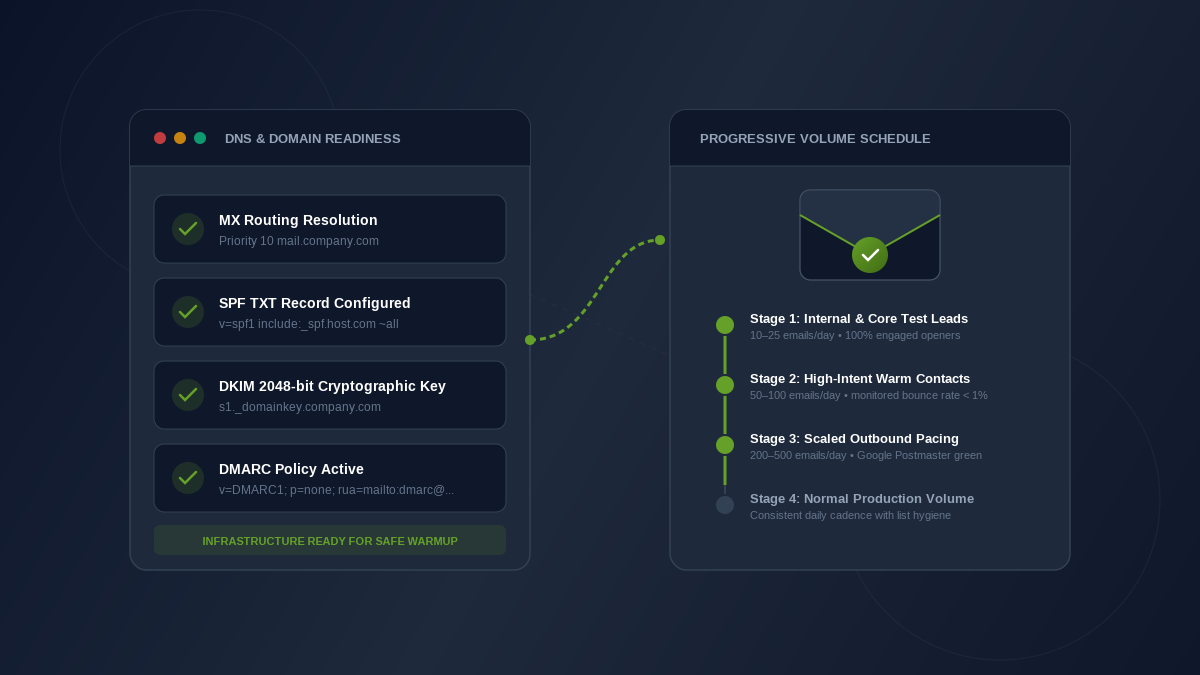
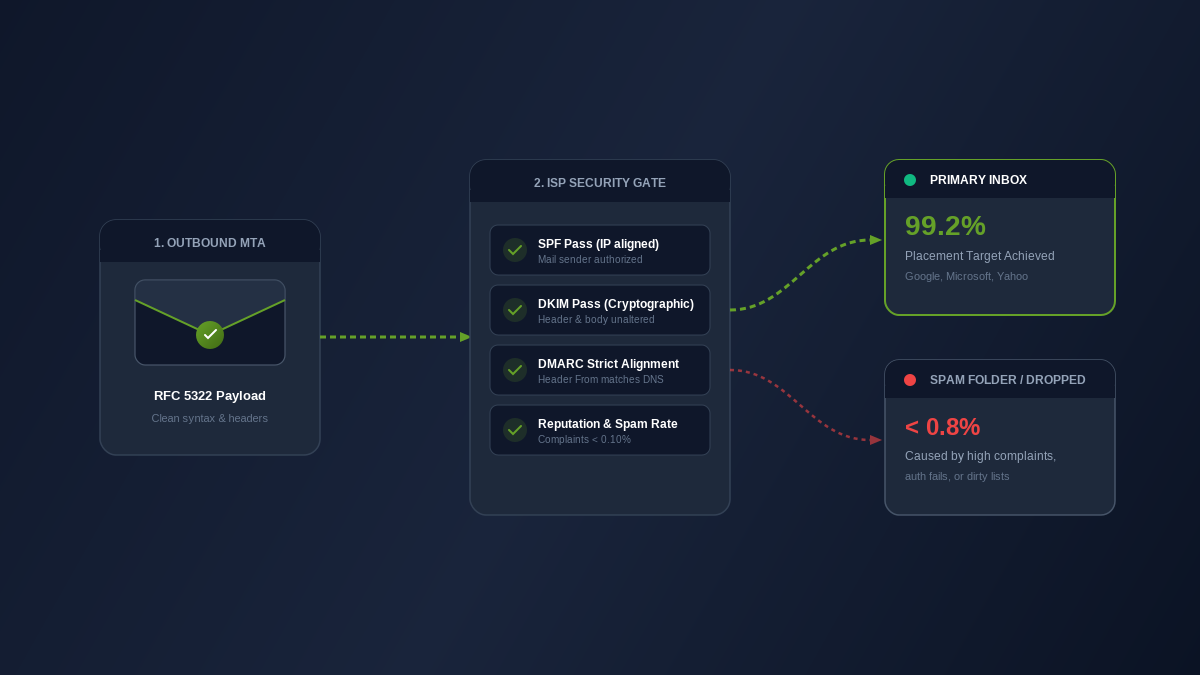
A single typo in your DNS TXT records can break DMARC alignment overnight. Quality deliverability tools continuously inspect your SPF records (checking for the 10-lookup limit), verify 2048-bit DKIM selectors, and confirm DMARC policy status. See SPF, DKIM, and DMARC Explained.
2. Granular Volume Pacing and Hourly Throttling
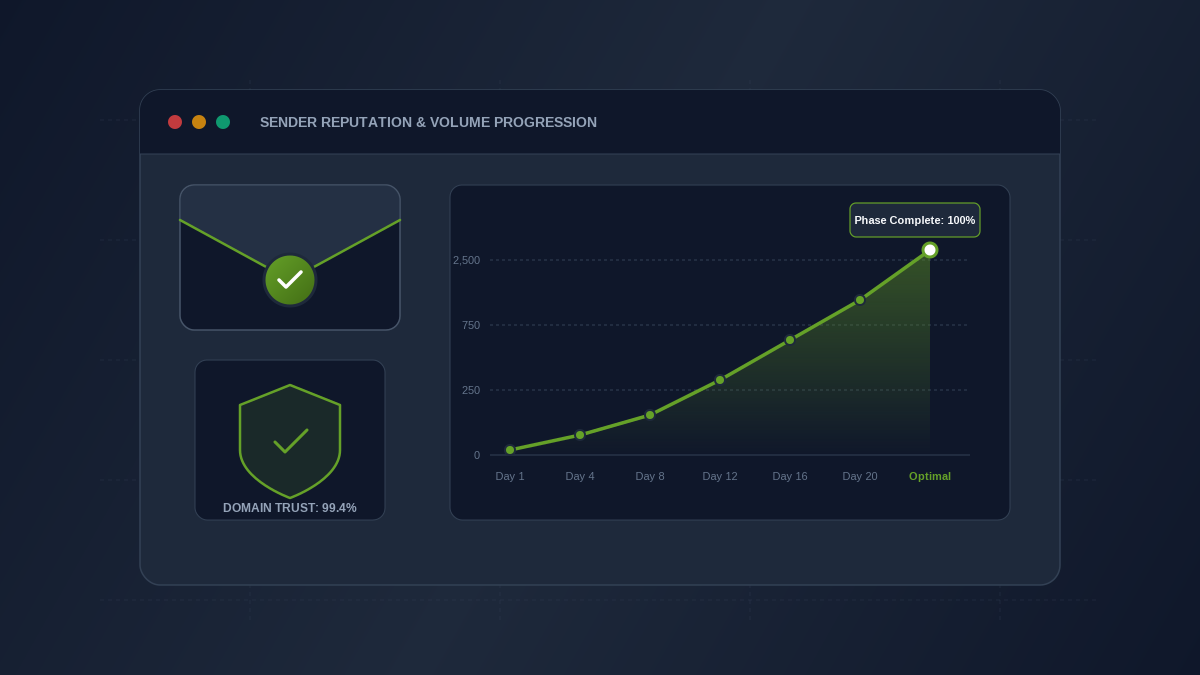
Instead of blasting 500 emails in 10 minutes, safe warmup software disperses messages evenly across active business hours. It allows you to set custom daily maximum limits (e.g. starting at 20 emails/day and scaling by 10% daily).
3. Official Reputation Telemetry (Google & SNDS)
Do not settle for arbitrary proprietary scores. Look for tools that integrate directly with official mailbox provider APIs, such as Google Postmaster Tools and Microsoft SNDS, providing true visibility into domain and IP reputation.
4. Real-Time Bounce and Complaint Alerts
Early detection prevents catastrophic reputation damage. Your platform should trigger instant notifications if hard bounce rates exceed 0.5% or spam complaints reach 0.05%, allowing you to halt sending before penalties occur. Review Email Bounce Rates and Spam Complaints.
Security, Workspace Safety, and Data Privacy
Connecting your business mailboxes to third-party software requires strict security diligence:
- OAuth 2.0 Access: Never share raw IMAP/SMTP passwords. Tools should connect via official Google Workspace or Microsoft 365 OAuth scopes.
- Data Encryption & Privacy: Ensure the vendor is GDPR-compliant and does not store or monetize the private message contents passing through your accounts.
Questions to Ask Before Selecting a Provider
- ✓ Does the tool promote artificial bot reply pools, or does it focus on genuine sending cadence and deliverability telemetry?
- ✓ Does the platform integrate with Google Postmaster Tools for real reputation monitoring?
- ✓ Are hourly throttle limits and volume caps fully customizable?
- ✓ Does the service include integrated email list verification to stop hard bounces before sending?
- ✓ Does the vendor clearly explain that warmup alone cannot guarantee 100% inbox placement?
Combine Safe Warmup with Instant List Cleaning
The safest foundation for email deliverability is a pristine recipient list. Use Emails Verification to strip out invalid mailboxes, disposable addresses, and spam traps before launching your next campaign.
Start Verifying Free with 100 Credits ➔Frequently Asked Questions
Do peer-to-peer email warmup bot networks violate Google and Microsoft terms of service?
Yes. Google Workspace and Microsoft 365 terms of service strictly prohibit automated synthetic interactions designed to manipulate spam filters. Relying on bot networks that automatically exchange fake emails and mark each other as 'Not Spam' carries severe risks of permanent domain blacklisting and account suspension.
What is the difference between an email verifier and a warmup platform?
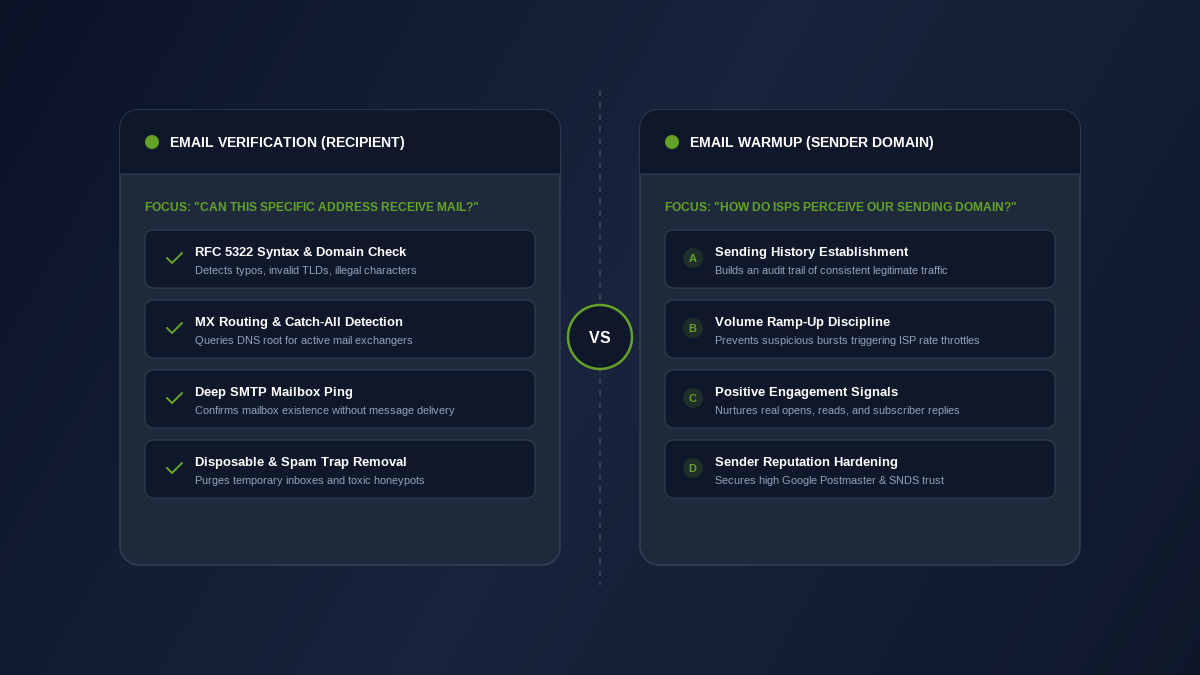
An email verifier (like Emails Verification) validates recipient addresses before sending to eliminate hard bounces and honeypots. A warmup platform manages outbound sending pacing, monitors DNS authentication, and tracks delivery telemetry over several weeks.
Can an email warmup tool guarantee inbox placement?
No legitimate tool can guarantee inbox placement. Inbox algorithms dynamically score every message based on recipient engagement, content relevance, and complaint rates. Any software claiming 'guaranteed 100% inbox placement' is employing deceptive marketing.