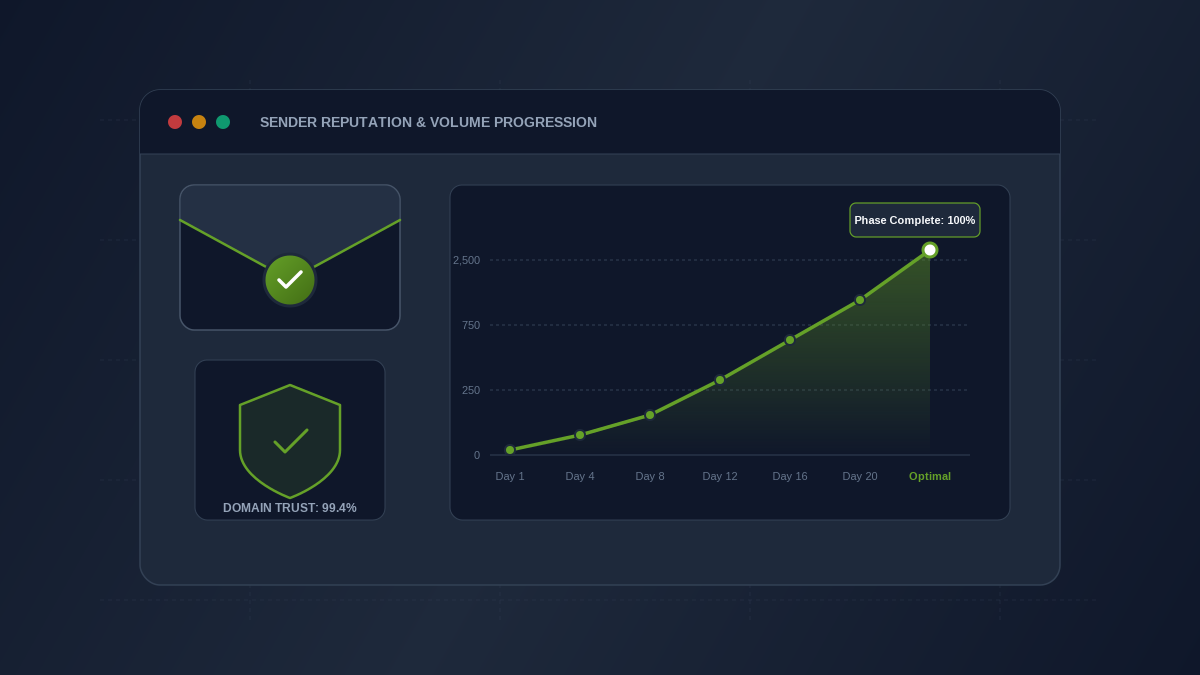
How Long Does Email Warmup Take? Timeline and Expectations
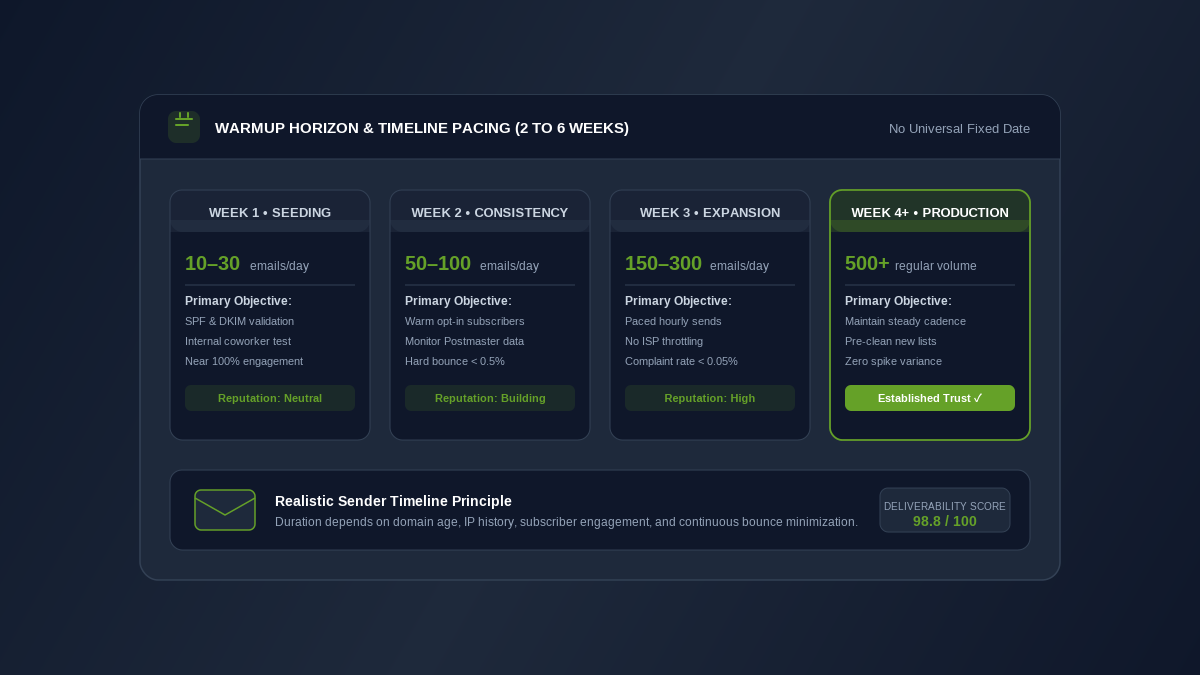
Direct Answer: On average, email warmup takes between 2 to 6 weeks. There is no universal fixed timeline: warming a domain with an established opt-in subscriber list can take 2 to 3 weeks, while establishing a brand new domain on a fresh dedicated IP address typically takes 4 to 6 weeks. The timeline is dictated by domain age, authentication status, daily target volume, recipient engagement, and bounce minimization.
Why Warmup Does Not Have a Universal Fixed Duration
Many marketers seek an exact calendar formula: "Send 20 on Monday, 40 on Tuesday, and send 5,000 on Day 14." Such static formulas are fundamentally flawed because destination mailbox algorithms do not evaluate calendar days in isolation; they evaluate statistical engagement ratios.
Consider two senders:
- Sender A: Sends transactional password reset links and receipt confirmations to active customers. Their open rate is 70%, reply rate is 15%, and spam complaint rate is 0.00%. Sender A can safely scale volume in 14 to 20 days.
- Sender B: Sends cold sales prospecting emails to an unverified scraped list. Their bounce rate is 4%, open rate is 12%, and spam complaint rate is 0.25%. Sender B will be throttled and sent to the spam folder within 5 days, regardless of how long their "warmup plan" was scheduled for.
New Domain vs. Established Sending Infrastructure
Domain age is an immutable initial constraint. Mailbox providers cross-reference public WHOIS registration timestamps:
- New Domains (< 30 Days Old): Placed in a defensive probationary sandbox. Expect higher scrutiny and temporary
4xxdeferrals if volume escalates prematurely. - Established Domains (1+ Year Old): Benefit from historical DNS stability and registered domain authority, enabling faster ramp-up velocity—provided the domain does not carry historical spam blocklist marks.
Dedicated IP vs. Shared ESP Infrastructure
Your warmup timeline also depends on whether you are warming a dedicated IP or sending through a shared pool:
| Infrastructure Type | Typical Warmup Timeline | Key Consideration |
|---|---|---|
| Shared IP (Mailchimp, Brevo, Klaviyo) | 2 to 3 weeks | The IP address already has an established reputation. You are primarily warming your specific d= domain reputation. |
| Dedicated IP (SendGrid, AWS SES) | 4 to 6+ weeks | The IP has zero historical telemetry. You must warm both the IP address and the domain reputation simultaneously. |
How Recipient Quality Governs Velocity
Mailbox providers measure positive and negative feedback loops during the warmup process:
- Positive Velocity Accelerators: Emails opened, scrolled, clicked, marked as important, replied to, or moved out of the spam folder by the recipient.
- Velocity Killers: Hard bounces (
550 User Unknown), messages left unread and deleted in bulk, spam complaints, and hits on dormant spam traps.
To prevent hard bounces from derailing your timeline, always clean your lists with pre-send email verification.
Realistic Week-by-Week Warmup Schedule
Here is an operationally sound warmup progression for a new sending domain targeting an enterprise volume of 1,000+ emails per day:
Week 1: Baseline DNS Validation & Seeding (15–30 emails/day)
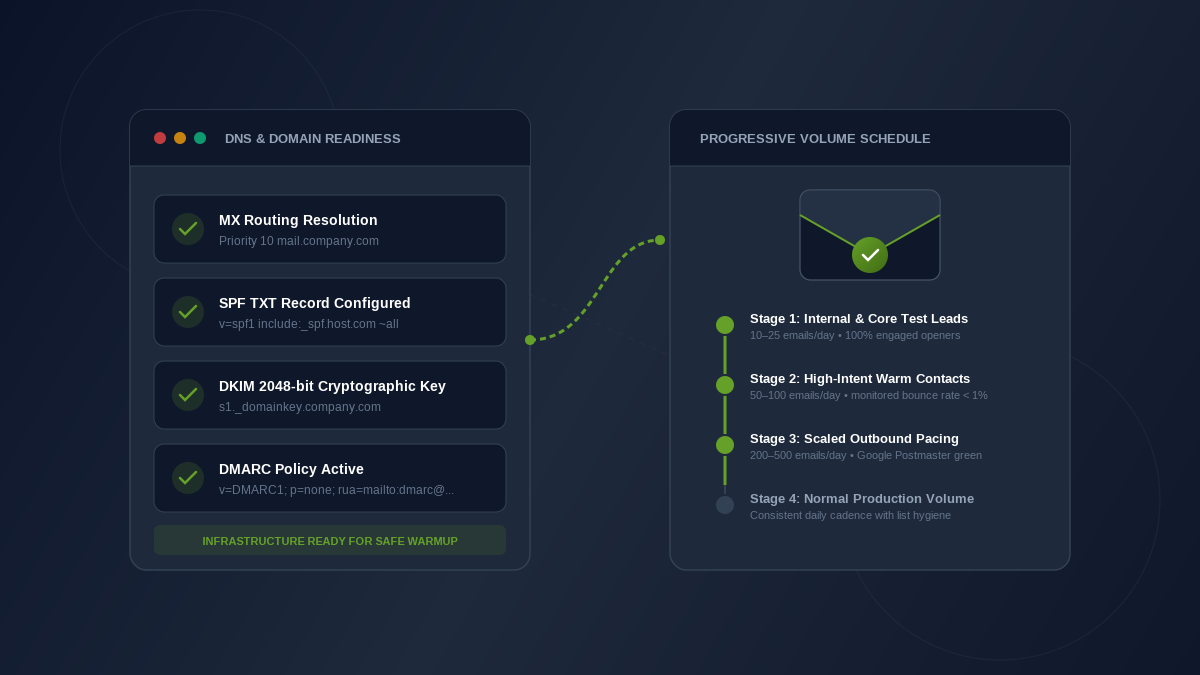
Ensure SPF, DKIM, and DMARC are fully aligned. Send only to internal team members, close business partners, or high-intent inbound contacts who will reliably open and reply. Confirm zero delivery deferrals in server logs.
Week 2: Controlled Opt-In Scaling (40–100 emails/day)
Introduce the most recent opt-in newsletter subscribers or active product users. Monitor Google Postmaster Tools for initial domain reputation ratings. Bounce rate must stay under 0.5%.
Week 3: Broadening Audience Segments (150–350 emails/day)
Pace sending evenly throughout business hours using queue throttling (e.g. max 20–30 emails per hour). Keep spam complaint rates strictly below 0.10%.
Week 4: Scaling Toward Production (400–800 emails/day)
Evaluate IP and domain reputation stability. If Postmaster Tools shows a "High" rating and deferral rates are 0%, expand toward regular sending volume.
Week 5+: Full Production Volume (1,000+ emails/day)
Maintain consistent daily volume. Avoid weekend drops followed by extreme Monday spikes.
Why Increasing Volume Too Quickly Damages Deliverability
Attempting to accelerate a warmup schedule triggers behavioral spam detection heuristics. When algorithms observe a 500% day-over-day surge in outbound volume from a young domain, they interpret the surge as a compromised server or spam outbreak. Once your domain is flagged for aggressive volume bursts, rehabilitating your sender reputation takes significantly longer than doing a patient warmup from the beginning.
Telemetry Signals to Audit Before Increasing Volume
- ✓ Zero hard bounces across the previous 7 days.
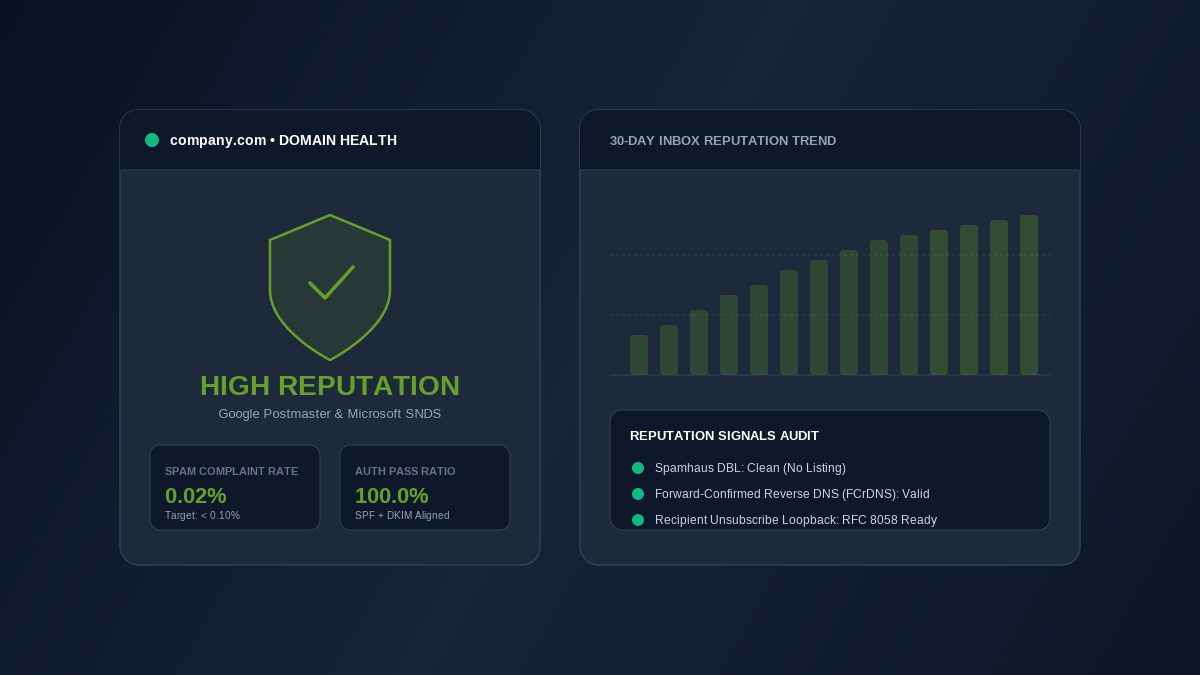
- ✓ Spam complaint rate below 0.05% in Google Postmaster Tools.
- ✓ No
421 4.7.0or451temporary throttling deferrals from destination servers. - ✓ Clean standing on all major public DNS blocklists (Spamhaus, Barracuda).
- ✓ 100% pass rate for SPF, DKIM, and DMARC alignment.
Pristine Data Keeps Your Warmup on Schedule
Don't let dead emails stretch your warmup timeline from weeks into months. Validate every recipient address in real time with Emails Verification.
Start Verifying Free (100 Credits) ➔Frequently Asked Questions
Can I warm up a domain in 7 days?
No. Anyone claiming you can complete email warmup in 7 days is misrepresenting how reputation algorithms function. Mailbox provider models require multiple weeks of consistent telemetry data across billing and weekend cycles to establish statistically reliable sender baselines. Rushing warmup almost always triggers deferral throttling.
How long should I warm up a secondary domain for outbound sales?
A new secondary outbound domain typically requires 3 to 5 weeks of steady, progressive warmup before handling daily sending limits of 40 to 60 emails per mailbox. The key is maintaining natural sending pacing and zero hard bounces.
What happens if I pause sending for two weeks after warming up?
Domain reputation gradually decays during periods of prolonged inactivity. If a domain stays dormant for 30+ days, mailbox providers reset historical trust baselines. When resuming, you should run a mini-warmup across 5 to 7 days rather than immediately jumping back to peak volume.